The cheapest way to not interfere with your trades is to not be there
There’s a version of trading discipline that sounds like a virtue: sit at the desk, watch every tick, stay focused for the whole session. It photographs well. It also quietly destroys more accounts than any strategy flaw, because the person doing the watching is the biggest open risk on the book.
Why is watching an open trade dangerous?
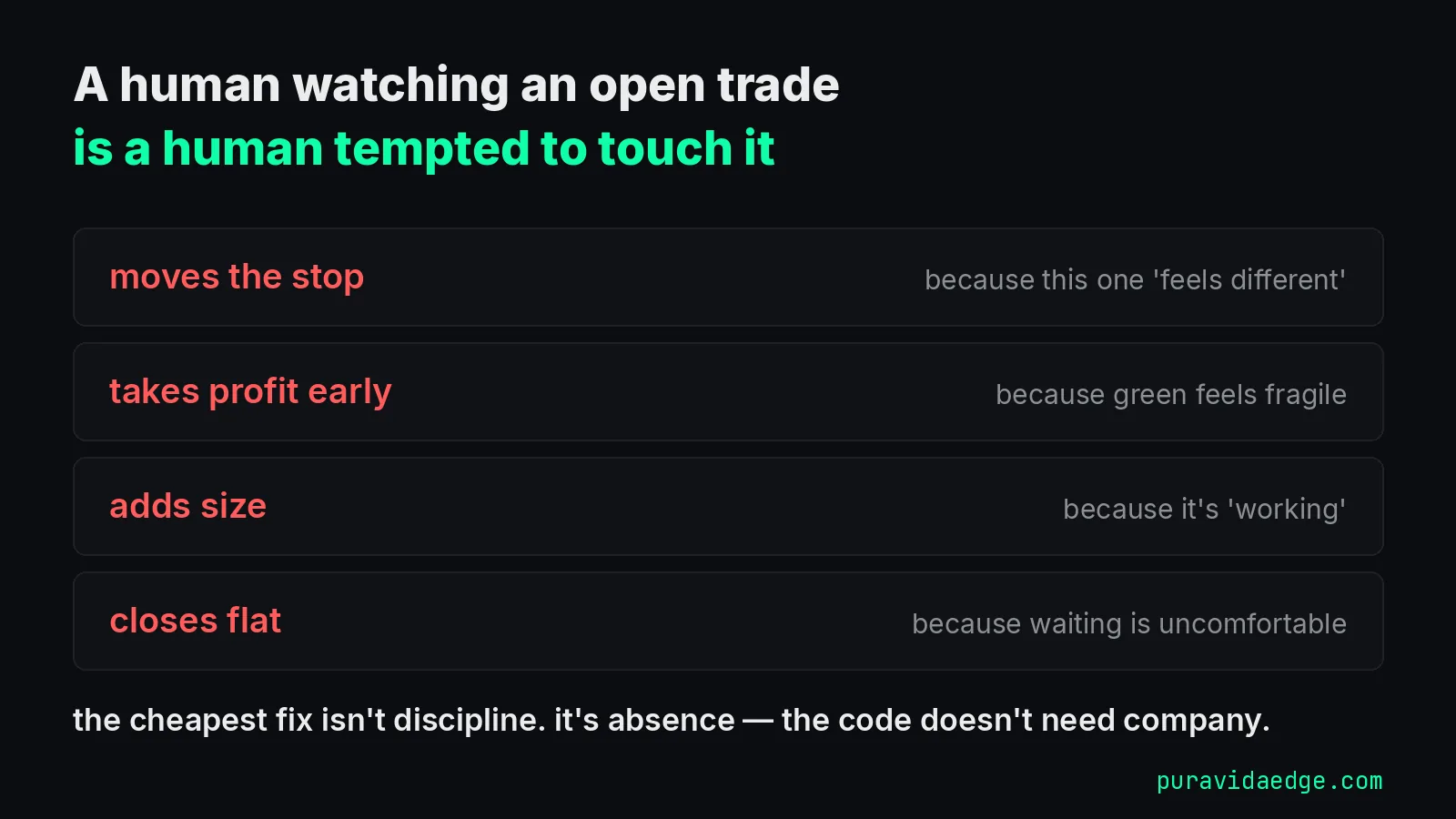
Because a human watching an open trade is a human tempted to touch it, and every touch has a direction. The stop gets moved because this one “feels different”. Profit gets taken early because green feels fragile. Size gets added because it’s “working”. The position gets closed flat because waiting is uncomfortable. Each intervention feels like risk management in the moment — and each one systematically trades a written plan for an improvised one.
Isn’t the answer just more discipline?
Discipline is the expensive fix: it has to be re-purchased every single session, it drains the same mental budget you need for everything else, and it fails precisely on the days it’s needed most. Absence is the cheap fix. If the entry, the stop and the target were all decided before the position opened, there is nothing left at the desk to decide — which means there is nothing at the desk for you to do except interfere.
That’s not a lifestyle claim. It’s an engineering one: the system doesn’t need company, and the fewer opportunities a human has to act, the fewer bad actions get taken.
What has to be true before you can walk away?
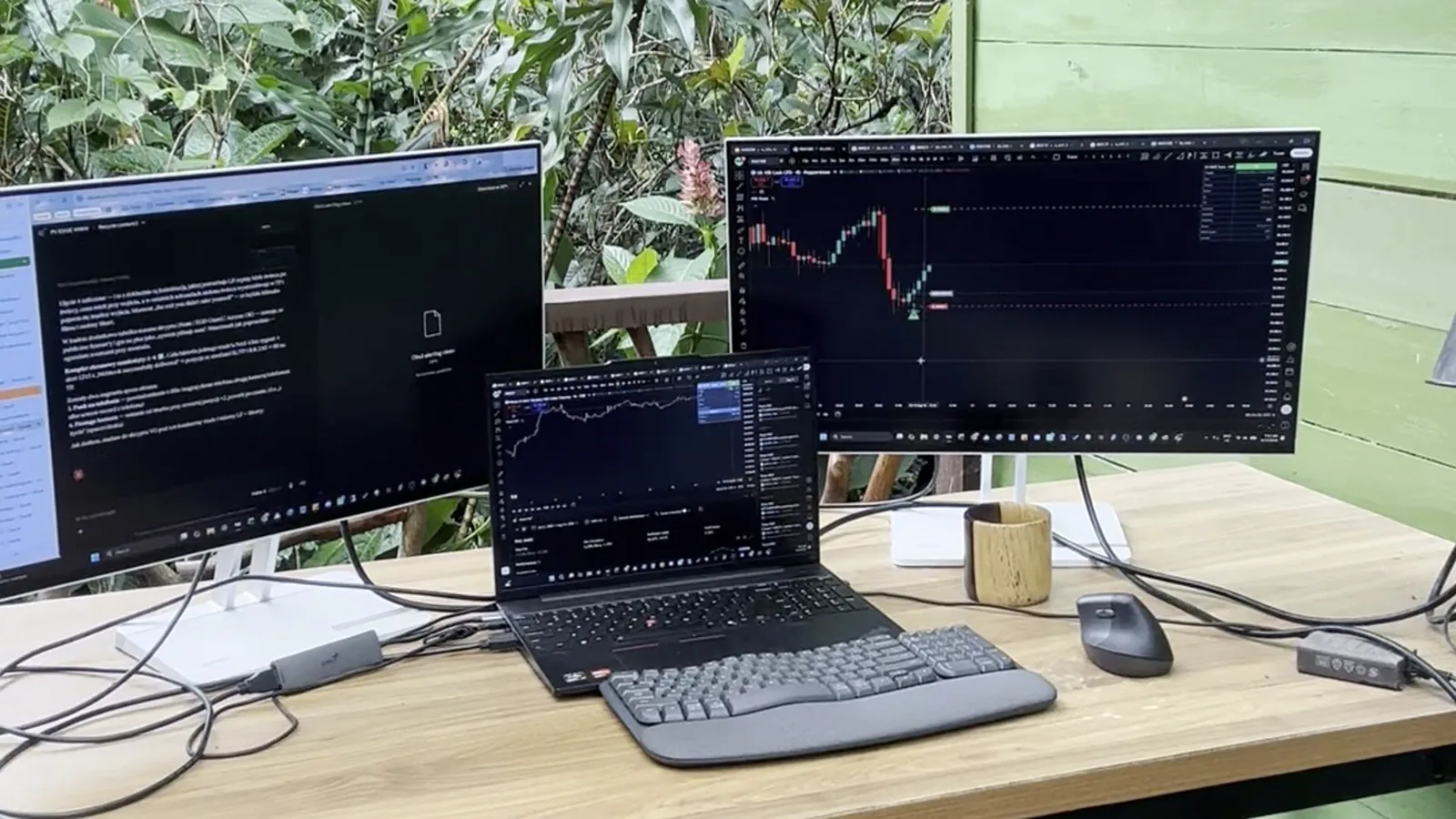
Three things. The exit logic has to be written down before the entry — both endings priced, as covered in why risk should be a number. The execution has to run without you: alerts and webhooks carrying orders out, not you clicking. And the sizing has to be set so that the worst case is survivable on the account, because walking away from a position that can end the account isn’t calm, it’s negligence.
When all three hold, leaving the desk stops being a risk and becomes part of the design. We filmed a full trade running exactly this way — signal to fill, with nobody at the keyboard: what one automated trade actually looks like.
What changes when you stop watching?
The trades stop being events. A position opening is no longer a summons to the desk; it’s a background process with a known worst case. The good weeks and the bad weeks start to feel the same, which is the point — the emotional flatness isn’t a side effect of automation, it’s the product. The market gets exactly two ways to end each trade, and you get your day back either way.
Educational content. Past performance does not guarantee future returns. Not financial advice.
10 strategies, 15 portfolios, one PDF.
Every result on this site, modeled and live separately, with the preset for each account tier. One PDF, then our letters with what the systems did.
By email, from Puerto Viejo, Costa Rica. Unsubscribe anytime.