Why your risk should be a number before the trade is a minute old
Ask a struggling trader what their risk is on the position they’re currently holding and you’ll usually get a story — about where the market probably won’t go, about where they’ll “start thinking about” getting out. Ask a systematic trader and you get a number, because the number existed before the position did.
What does “risk as a number” actually mean?
Stop distance multiplied by position size equals maximum loss. All three values are fixed the moment the trade opens: the stop comes from the strategy’s logic, the size comes from the preset, and the product is the worst case in dollars — known at entry, not discovered later.
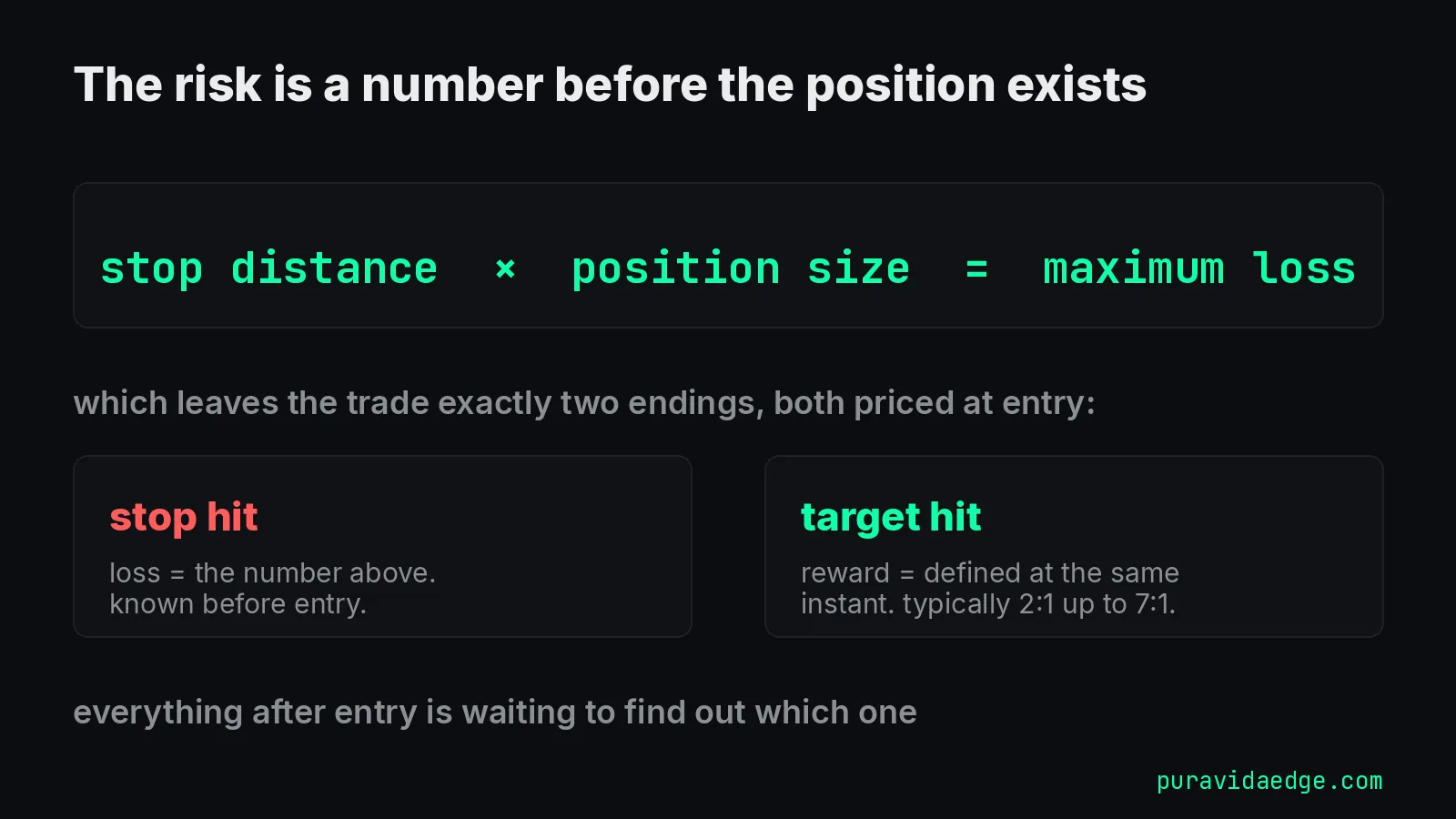
Once that’s true, the trade has exactly two endings and both are priced. Stop hit: the loss is the number above. Target hit: the reward was defined in the same instant — on our setups anywhere from roughly two-to-one up to seven-to-one, depending on the strategy family. Everything after entry is just waiting to find out which ending it is.
Why does this matter more on a funded account?
Because on a funded account the thing that ends you isn’t a losing trade — it’s a loss that was sized wrong against the drawdown limit. Prop accounts don’t blow up on the balance; they blow up on the trailing drawdown line, which is much closer than most traders think. Sizing each trade’s maximum loss against that line, not against the account size, is the single highest-leverage fix available — you can sanity-check your own numbers in the sizing checker and see how the drawdown line actually moves in the drawdown visualizer.
What does “figure out the exit later” actually cost?
The exit you invent under pressure is systematically worse than the one you’d have written down in advance, because it gets made by the version of you that’s watching money move. Stops get widened because this one “feels different”. Winners get cut because green feels fragile. None of those decisions exist in a system where both endings were fixed at entry — there is nothing left to decide.
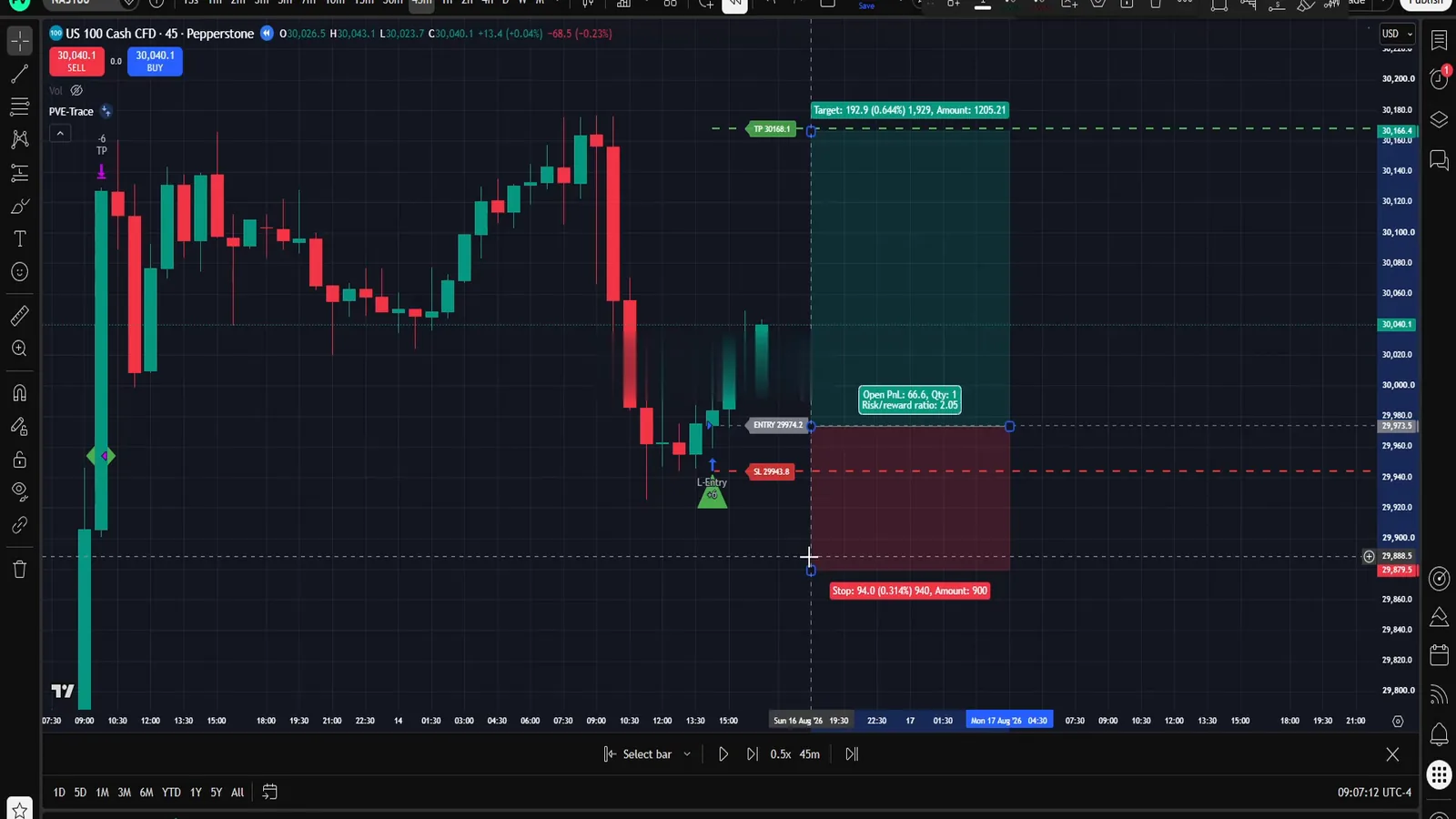
We filmed what that looks like on a real trade: the entry, stop and target printing in the same instant, and the position closing itself hours later. That’s the whole argument in ninety seconds — the anatomy of one automated trade.
Does defining risk in advance guarantee anything?
No. It guarantees exactly one thing: that no single trade can cost more than the number you accepted before it opened. Whether the strategy has edge is a separate question, answered only by a long sample — ours is twelve months of backtest plus the live months published in the monthly results, red days included. Risk definition doesn’t make a system profitable. It makes a profitable system survivable.
Educational content. Live results from funded accounts at 100K presets, after commission and slippage. Past performance does not guarantee future returns. Not financial advice.
The rule is the filter. The Playbook shows what fits through it.
Which configurations fit tight daily limits, trailing floors and consistency rules — sized to the drawdown, not the balance. One PDF, then our letters with what the systems did.
By email, from Puerto Viejo, Costa Rica. Unsubscribe anytime.