How to verify a trading bot actually took the trade
The trading internet runs on screenshots, and screenshots are the least verifiable evidence format ever invented. A green P&L card takes thirty seconds to fabricate. If you’re evaluating anyone’s automated results — including ours — you need something a screenshot can’t give you: independent records that have to agree with each other.
What is the three-timestamp test?
One real automated trade leaves at least three separate timestamps: the signal on the chart, the entry in the alert log, and the delivery confirmation from whatever carries the order to the broker. If the trade really happened, all three land in the same minute. If any pair disagrees, something in the pipeline is lying — or the “trade” was drawn on after the fact.
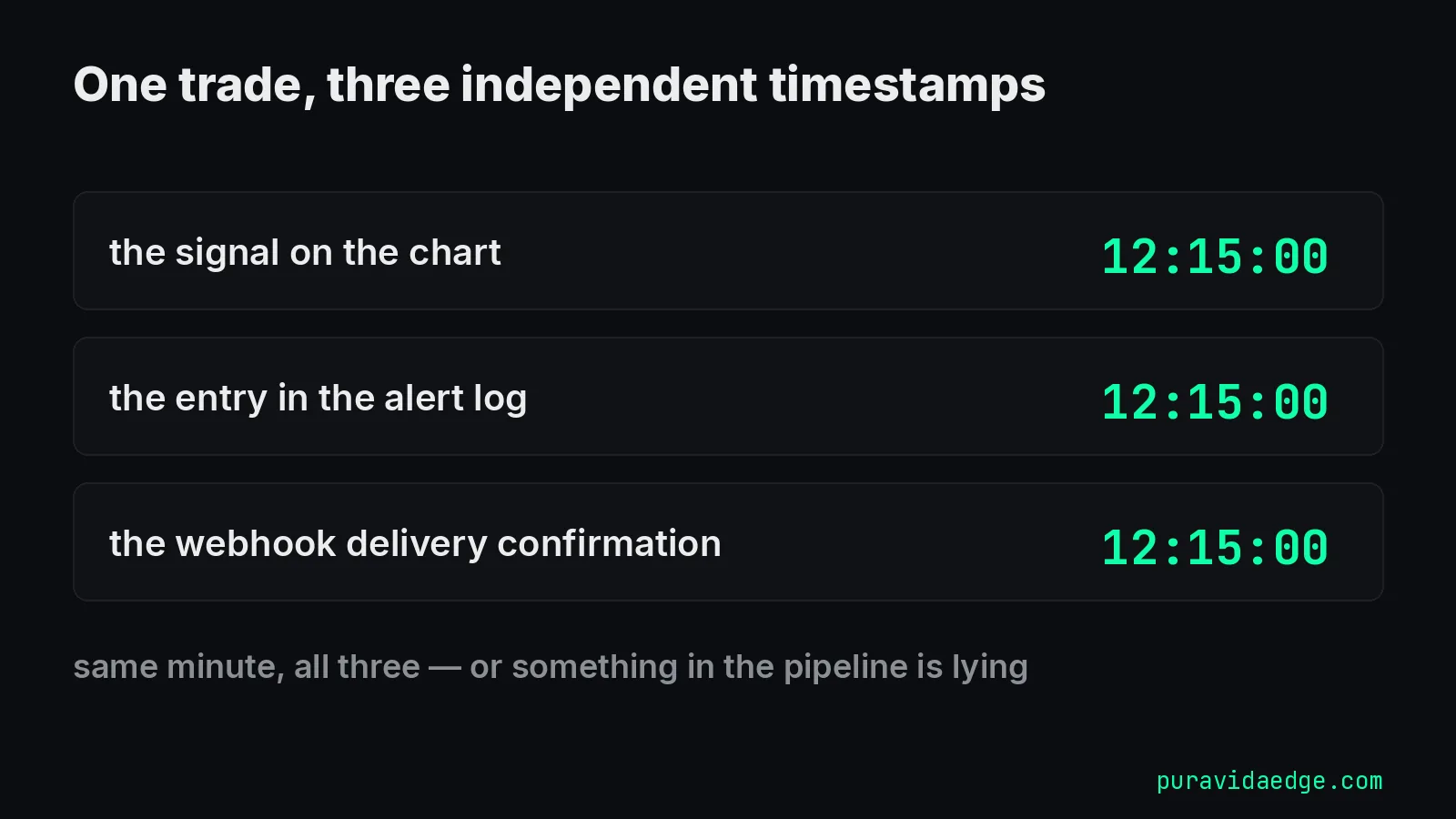
The reason this works is that the three records live in different places. A chart annotation can be added anytime. An alert log entry cannot — the platform stamps it when the alert fires, and there is no edit button.
Where do you find these records on TradingView?
The alert log. Every fired alert sits there with its exact time and, if a webhook is attached, a delivery status line. When the log says the webhook was successfully delivered at 12:15:00 and the chart shows the entry on the 12:15 bar, those two records confirm each other without either one needing your trust.
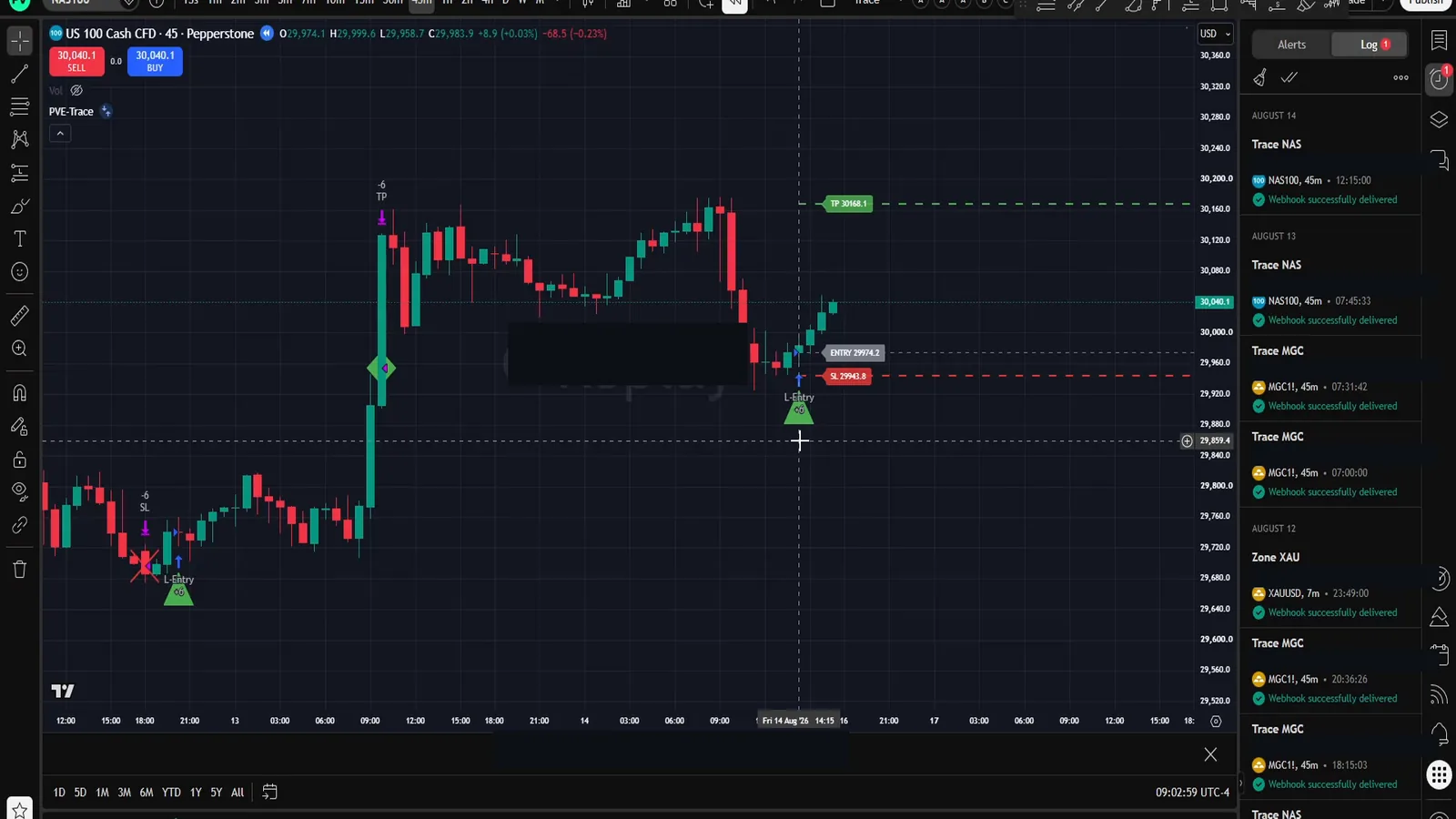
We filmed a complete trade with all of these records visible — the full anatomy of one automated trade is a better demonstration than any description.
What should you demand from anyone selling signals or bots?
Three things, in increasing order of difficulty for a fraud. First, entry timestamps that can be matched against the chart — not just exit screenshots. Second, the losing trades, presented with the same detail as the winners; a track record with only good months in it is a highlight reel. Third, results that stay consistent when costs are included, because commission and slippage are where fabricated performance usually falls apart.
Anyone running a real system can produce all three in minutes. Anyone who can’t, or who answers with another screenshot, has answered your question.
Why do we publish this standard against ourselves?
Because we’d rather be checked than believed. Every figure we publish carries commission and slippage inside it, the red strategy families are documented next to the green ones in the monthly results, and the methodology page describes how the numbers are produced. The three-timestamp test is the standard we’d demand from anyone else — so it’s the standard here.
Educational content. Past performance does not guarantee future returns. Not financial advice.
See every prop firm rule, grouped by mechanism →
The systems the alerts come from.
Every strategy and portfolio that runs on TradingView, with the preset per account tier. One PDF, then our letters with what the systems did.
By email, from Puerto Viejo, Costa Rica. Unsubscribe anytime.